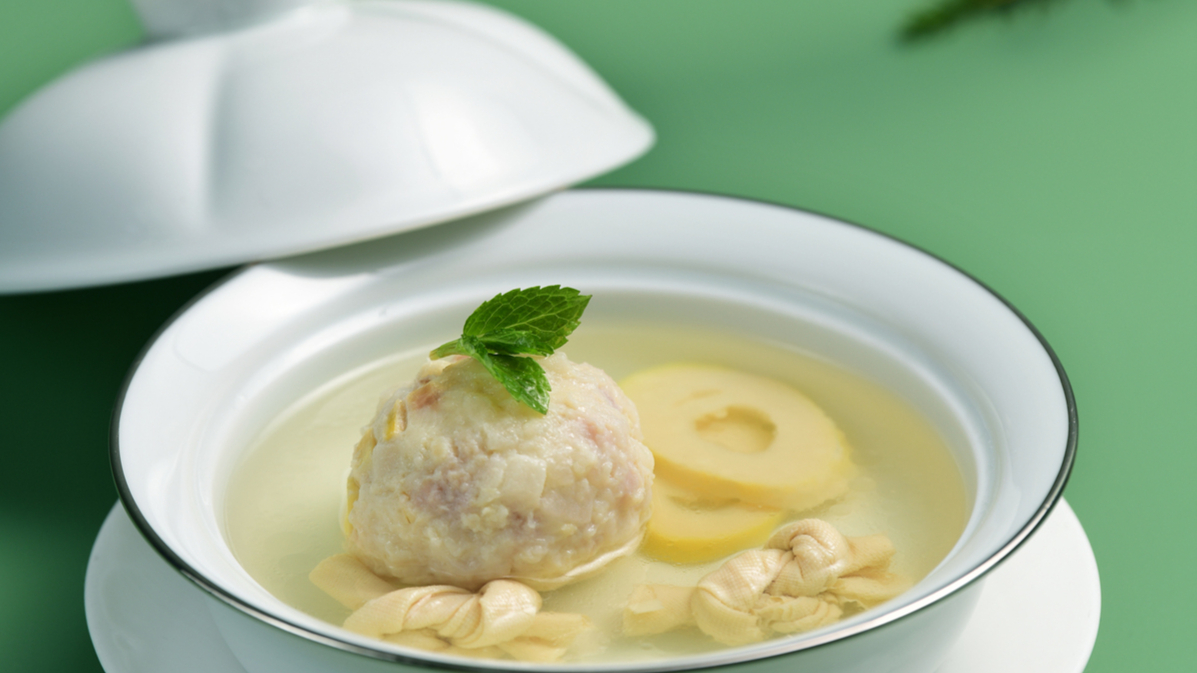
Lion's Head Meatballs
Introduction
Lion's Head Meatballs, known as "Shi Zi Tou" in Chinese, are a traditional dish that holds a significant place in Huaiyang cuisine, originating from China's Yangtze River Delta, particularly Jiangsu province. This dish is celebrated for its balance of flavors and textures, presenting a soft and juicy meatball that is both aromatic and visually appealing. Typically made with lean pork and accompanied by green vegetables, Lion's Head Meatballs exemplify key principles of Chinese culinary arts: appearance, aroma, and taste.
History
The origin of Lion's Head Meatballs is steeped in Chinese history and folklore, tracing back to the era of Emperor Suiyang's cruise along the Grand Canal. During his visit to Yangzhou, the local officials presented a dish named sunflower chopped meat, which captivated the emperor and his entourage with its exquisite presentation and flavor. It is said that the dish was renamed Lion's Head during the Tang Dynasty (618-907), as the meaty core and vegetable "mane" were associated to the head of a lion. This dish eventually found its way into the imperial kitchens of the Qing Dynasty (1644-1911), cementing its place in Chinese culinary tradition. Today, it remains a beloved staple, revered for its rich history and savory taste.
Ingredients
The traditional recipe for Lion's Head Meatballs consists primarily of finely minced pork, which is essential for achieving the dish's characteristic tenderness and flavor. The inclusion of green vegetables, such as Chinese cabbage or bok choy, adds a refreshing contrast to the rich meat. Variations might include ingredients like crab meat or water chestnuts to enhance texture and flavor. Seasonings like ginger, scallions, soy sauce, and Shaoxing wine are used to deepen the flavor, while cornstarch may be added to bind the mixture and ensure the meatballs retain their shape during cooking.
Preparation
Meatball Formation
Creating the perfect Lion's Head Meatball begins with selecting high-quality pork, ideally a mixture of lean and fat, to ensure a juicy and tender result. The meat is finely minced, sometimes chopped to the size of rice grains, which allows the flavors to meld and the juices to be trapped within. This mixture is combined with finely chopped vegetables, seasonings, and a binding agent like cornstarch. Care is taken to mix thoroughly but gently, preserving the texture. The meat mixture is then formed into large, golf-ball-sized spheres, ready for cooking.
Cooking Process
There are various methods to cook Lion's Head Meatballs, with braising being the most traditional and favored technique. The meatballs are first lightly browned in oil to develop a crust and deepen flavor, then simmered in a savory broth made from chicken stock, soy sauce, and various aromatics. This slow-cooking process allows the meatballs to absorb the flavors of the broth while staying moist. Some versions may be steamed or even served in a light soup, allowing the natural flavors of the ingredients to shine through.
Variations
While the classic Lion's Head Meatball is cherished for its simplicity and tradition, several variations exist across China, each offering a unique twist on the original. In some regions, crab meat is added to the pork mixture, elevating the dish with a touch of sweetness and luxury. Water chestnuts may be incorporated for an added crunch, while others might infuse the broth with additional spices or herbs for a more complex flavor profile. In the North of China, the dish is sometimes referred to as the "giant meatball" or "meatball of quadruple happiness," highlighting its auspicious nature.
Cultural Significance
Lion's Head Meatballs are more than just a culinary delight; they hold a significant place in Chinese culture and gastronomy. As a symbol of prosperity and happiness, they are often served during festive occasions and family gatherings. The dish also plays a role in highlighting the artistry of Huaiyang cuisine, renowned for its meticulous preparation and balance of flavors. Its historical ties to Chinese royalty and its presence in imperial cuisine further underscore its cultural importance, making it a dish steeped in tradition and heritage.
Serving Suggestions
Traditionally, Lion's Head Meatballs are served with a side of steamed rice or noodles, allowing diners to savor the broth and flavors fully. The dish is often accompanied by a variety of side dishes, such as stir-fried vegetables or a light soup, to complement the richness of the meatballs. To enhance the dining experience, garnishes like sliced scallions or cilantro may be added, providing a fresh contrast. When served as part of a banquet or special occasion, Lion's Head Meatballs are typically presented in a large, communal bowl, inviting everyone to enjoy this beloved dish together.
Popularity and Influence
Lion's Head Meatballs have transcended their regional roots to become a cherished dish enjoyed across China and internationally. Their popularity has led to adaptations in various Chinese restaurants worldwide, where chefs put their spin on the classic recipe. Influential culinary figures, such as the prodigious artist Zhang Daqian, have historically contributed to the dish's fame. Lion's Head Meatballs have also made their mark in culinary literature, featuring in cookbooks that celebrate traditional Chinese cuisine. As a result, this dish continues to inspire chefs and food enthusiasts, perpetuating its legacy for future generations to appreciate.








